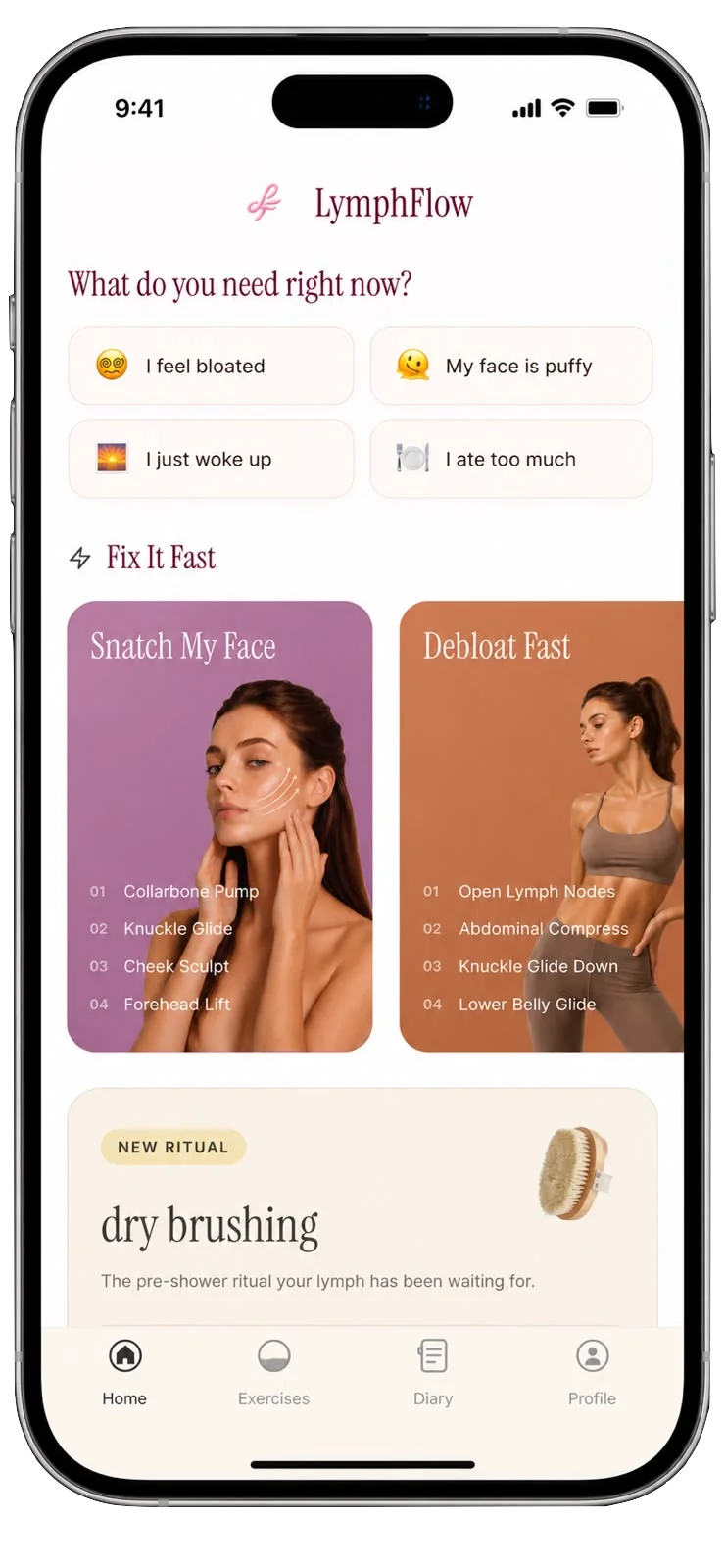
You did not gain weight overnight and your face has not changed shape. What happened is simpler and more boring: you spent seven hours horizontal, and fluid that spends the day being pulled toward your feet redistributed evenly across a body that was lying flat. Some of it settled in the loosest, thinnest-skinned tissue you own, which is the area around your eyes.
By late morning most of it has drained on its own. The question is what makes some mornings much worse than others, and what you can do on those.
1. Sleeping flat
The main one, and the easiest to test. Gravity stops helping the moment you lie down, and your face is no longer the highest point of your body. An extra pillow, or anything that raises your head a few inches, changes how much fluid pools around your eyes overnight. People who try this usually notice within two or three nights.
2. Salt at dinner
Sodium makes your body hold onto water to keep the concentration in your blood stable. Eat a salty dinner and you carry the extra fluid into the night, where it settles wherever you are lying. The timing matters more than the daily total: the same amount of salt at lunch has mostly moved through by bedtime.
3. Alcohol
Alcohol does two things at once here. It dehydrates you, which makes your body cling to whatever fluid it has, and it dilates blood vessels, which lets more fluid leak into surrounding tissue. That combination is why a hangover face looks different from a tired face.
4. Not enough sleep
Short or broken sleep raises overnight cortisol, and cortisol encourages sodium and water retention. It also leaves the skin under your eyes looking thinner and darker, which makes the same amount of puffiness read as worse. Two effects stacking is why one bad night can look like several.
5. Where you are in your cycle
Fluid retention rises in the days before a period as progesterone and oestrogen shift. If your puffiest mornings cluster in the same week each month, that is the explanation, and it is not something to fix so much as to expect.
6. Crying, heat and allergies
All three send extra fluid to the area around your eyes specifically. Allergy puffiness usually comes with itching and tends to be worst in the same weeks each year. Heat causes vessels to dilate, which is why summer mornings and a hot bedroom both make it worse.
7. Simply being still
Lymph has no pump. It moves when your muscles squeeze the vessels and when your diaphragm changes the pressure in your chest as you breathe. Sleep is the longest stretch of stillness you get, so overnight is when fluid has the least help going anywhere. This is the reason the fix is movement and massage rather than a product.
The five-minute fix
On the mornings it has already happened, directional massage clears it faster than waiting does. The order matters more than the technique:
- Open the collarbone. Fingertips in the hollows above your collarbones, gentle pumps 10 times. This is the exit, so it goes first.
- Clear the neck. Flat fingers behind the ear, stroke down toward the collarbone, 10 each side.
- Under the eyes. Ring fingers, glide gently outward toward the temples. Lightest pressure of the whole routine.
- Cheeks outward. Flat fingers from beside the nose out toward the ears, five sweeps.
- Jawline. Hook your index fingers under the jaw at the chin, glide back toward the ears.
- Close at the collarbone. Ten more pumps where you started.
Light pressure throughout, roughly what you would use on your own eyelid. The full facial routine covers each stroke in more detail, and the routine builder will time it for you.
A cold compress for 30 seconds before you start helps too, mostly by constricting blood vessels. That is also all a cold jade roller is doing, which is worth knowing before you buy one.
When morning puffiness is worth a doctor
Everyday puffiness follows a pattern: worst on waking, gone or nearly gone within a couple of hours, worse after salt, alcohol or a short night. Anything that breaks that pattern deserves a professional opinion.
See a doctor if the swelling does not settle during the day, if it appears suddenly and severely, if it is only on one side, if it comes with swelling in your hands or ankles, or if it arrives with shortness of breath. Persistent facial swelling can point to thyroid, kidney or heart issues, and those are not massage problems.