First, what a double chin is actually made of
The soft fullness under a jaw is usually a blend of three things: submental fat, which is structural; skin and posture, which decide how it drapes; and retained fluid, which varies day to day. Gua sha, like any massage technique, can only address the third. That is not nothing. The under-jaw area sits directly on the drainage route from your face to your neck, and it holds fluid visibly, which is why the same face can show a soft jawline on Monday and a defined one on Thursday.
So the honest answer to "does gua sha work for a double chin" is: it reduces the puffy component, temporarily, and it does it well. It does not remove fat or tighten loose skin. If most of your fullness is fluid, the mirror will reward you. If it is mostly structural, no stone will change that, and anyone claiming otherwise is selling stones.
How to use gua sha under your chin
You need a gua sha stone and some slip: a facial oil or rich moisturizer, so the stone glides rather than drags. Keep the pressure light to medium; the skin should flush slightly pink at most, never red or sore.
- Open the drains first. Before the stone touches your chin, press the hollows above your collarbones gently 10 times and sweep down the sides of your neck with your hands. Fluid you scrape away needs somewhere to go.
- Scrape from chin to ear. Hold the stone almost flat against the skin, notched edge hugging the jawline. Glide from the center of your chin along the underside of the jaw to just below the ear. Five to eight slow strokes per side.
- Work the under-chin pocket. With the flat edge, sweep from directly under your chin outward and back toward the angle of the jaw, covering the soft area where fluid pools. Five strokes per side.
- Drain the neck. Finish with downward strokes on the sides of your neck, from behind the ears toward the collarbone. This carries everything you moved to the exit. Never scrape upward on the neck.
Three to four minutes total, once a day. Most people fold it into an evening skincare routine, since you already have product on your face, though morning rounds show the depuffing best.
The mistakes that leave marks
- Too much pressure. Gua sha on the body traditionally leaves redness; on the face and throat it never should. Light wins, again.
- No oil. A dry stone drags and irritates the skin instead of gliding.
- Scraping toward the chin. Direction is outward and down, from the center of your face toward the ear and then down the neck. Reversing it pushes fluid back into the pocket you are trying to empty.
- Chasing soreness. The lymphatic system responds to feather-light input. Discomfort means you have left drainage territory.
Do you actually need the stone?
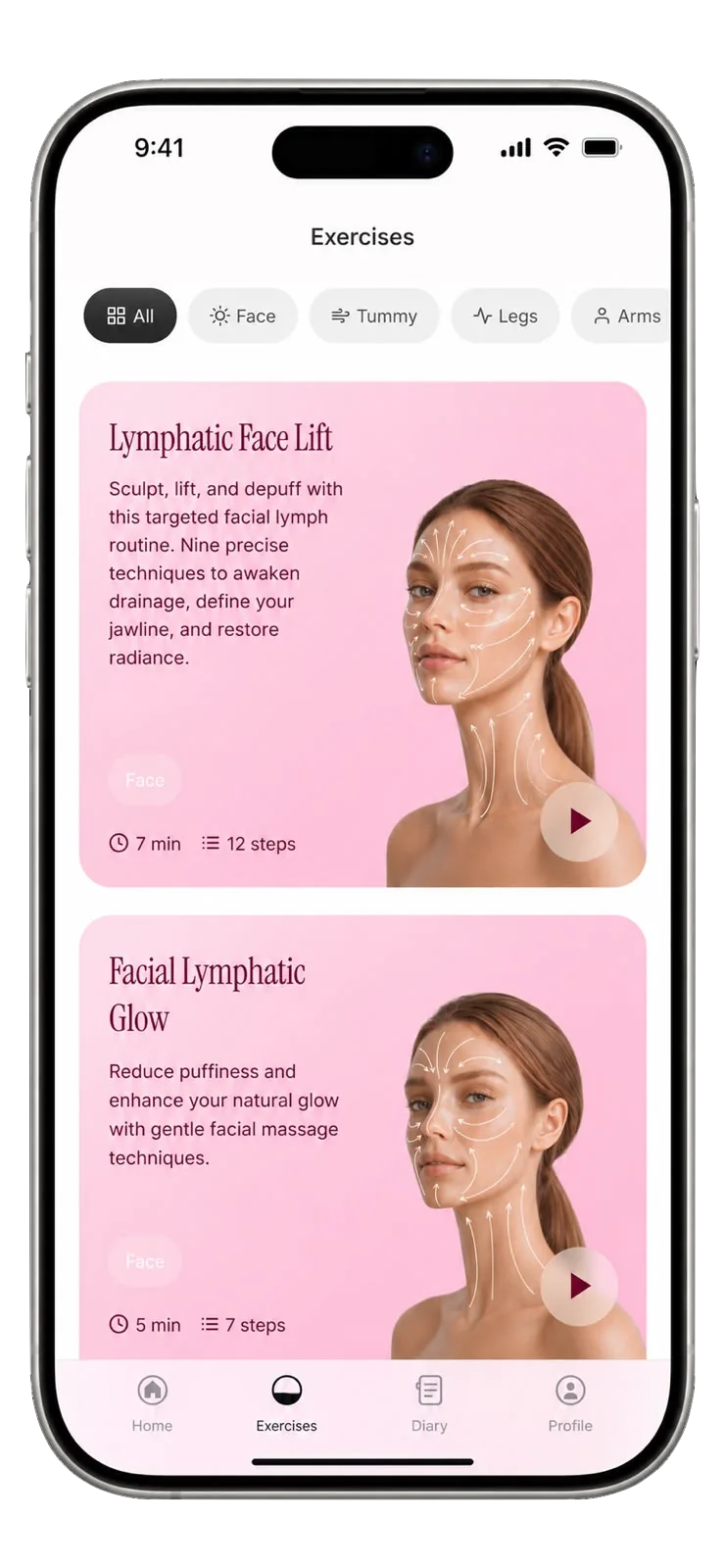
No, and this is the part the gua sha industry skips. The drainage effect comes from the direction, the pressure and the repetition, all of which your knuckles and fingertips deliver perfectly well. A stone gives you a cool, pleasant edge and a little ritual, and if that makes you consistent, it has earned its place on your shelf. But hands travel everywhere with you, and the jawline sequence in a guided routine, knuckle glides from chin to ear followed by neck sweeps, is the same physics with nothing to buy or wash.
Whichever tool you pick, the compounding factor is the same one as everywhere in lymphatic work: daily beats occasional, and two weeks of consistency is where jawlines start photographing differently.