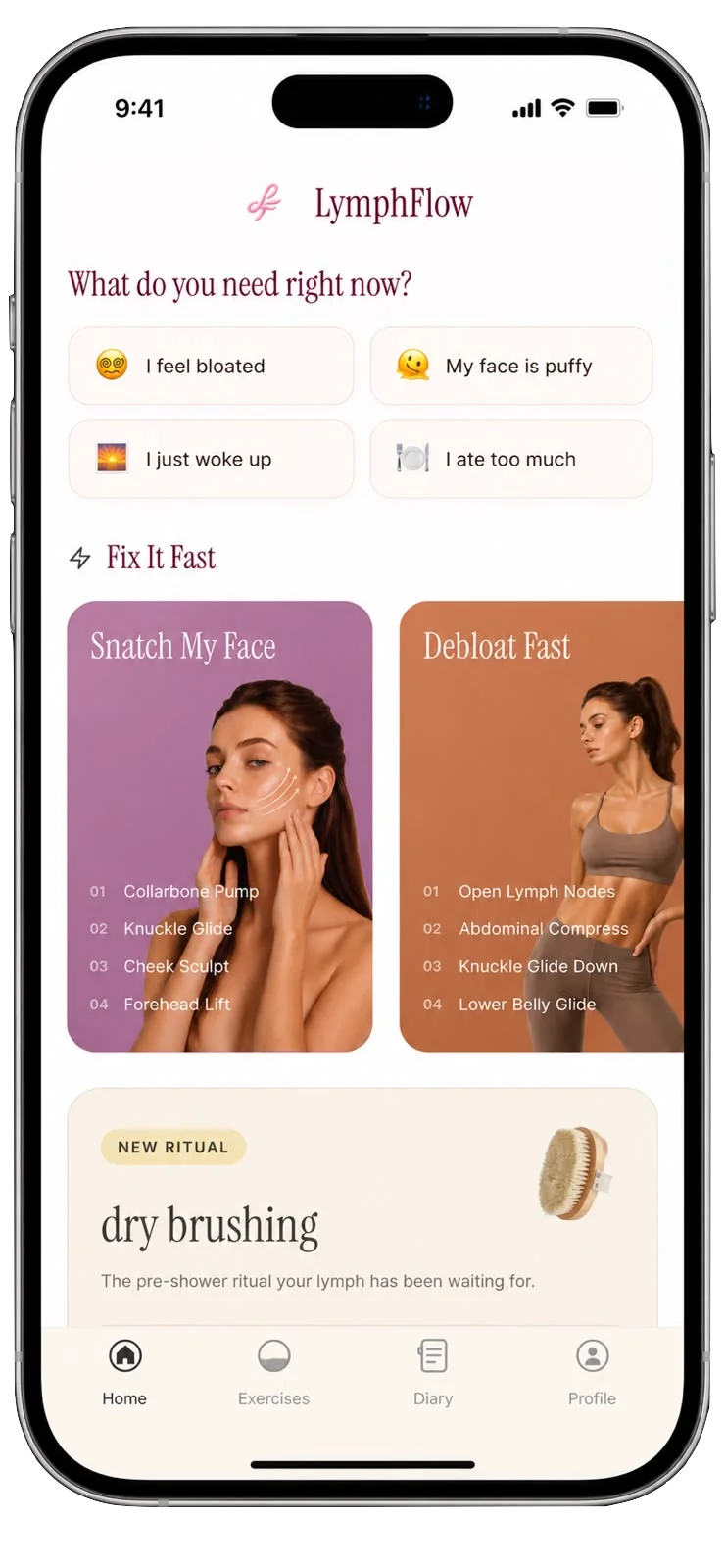
Bloating is the least glamorous thing the wellness world talks about, and one of the most common. A heavy dinner, a stressful week, a long flight, the days before your period: the result is the same tight, distended, sluggish feeling in your middle. Abdominal massage is one of the few things you can do about it in the moment, it costs nothing, and it borrows its logic from how your gut and lymphatic system actually work.
Why massaging your stomach helps with bloating
Three things are going on. First, gentle pressure helps move trapped gas and sluggish contents along your colon, which runs in a clockwise circle around your abdomen: up your right side, across, and down your left. Massage that follows this direction supports what your gut is already trying to do. Second, slow strokes stimulate lymphatic flow in the abdominal wall, easing the fluid part of the puffiness. Third, and easy to underrate, slow belly massage flips your nervous system toward its rest-and-digest state. Digestion works better when you are calm, and ten slow minutes with warm hands on your stomach is a very effective way to get there.
How to massage your stomach for bloating, step by step
Lie down or lean back comfortably, knees bent, hands warm. Pressure should be gentle: this is a persuasion, not an excavation.
- Settle in with breath. Three slow breaths into your belly, letting it rise under your hands. This alone starts the shift toward rest-and-digest.
- Warm-up strokes. With a flat hand, sweep gently from your ribcage down toward your navel a few times on each side.
- Clockwise circles. The core of the routine. With your palm or stacked hands, make slow circles around your navel, always clockwise as you look down at yourself. Start wide, spiral gently inward, and repeat for two to three minutes.
- The I-L-U strokes. A classic therapists teach: with light pressure, stroke down your left side (the letter I), then across the top and down the left (an upside-down L), then up the right, across and down the left (an upside-down U). Five of each. It traces your colon's actual route.
- Gentle lifts. Softly pinch and lift small folds of the belly, moving around the navel. This wakes up the tissue and feels surprisingly relieving on a tight tummy.
- Finish inward and down. Sweep from your hips inward and down toward the groin, where the abdominal lymph drains, then rest your hands on your belly for a few final breaths.
Total: eight to ten minutes. Evening is the natural slot, an hour or more after eating. Doing it directly on a very full stomach is uncomfortable and counterproductive; give dinner a head start.
When it helps, and when it won't
Massage shines for everyday bloating: post-meal heaviness, gas discomfort, period bloating, travel and desk-day sluggishness. Many people feel gas move and the tightness soften within minutes. It will not fix chronic digestive conditions, food intolerances or constipation that has lasted days, and it is the wrong answer entirely for severe pain, fever, or a hard, tender abdomen. Those are doctor situations, promptly. Skip abdominal massage during pregnancy unless your doctor or midwife has specifically okayed it.
Mistakes that make it useless
- Pressing hard. Deep digging tenses the abdominal wall, which is the opposite of what you want. Gentle and slow wins.
- Going counterclockwise. Direction is the whole trick. Clockwise follows your colon; the reverse works against traffic.
- Massaging mid-meal or right after. Wait at least an hour.
- Expecting one session to fix a week of habits. Like all lymphatic work, the compounding effect comes from doing it regularly, not heroically.